Types of free-flight planes - power sources
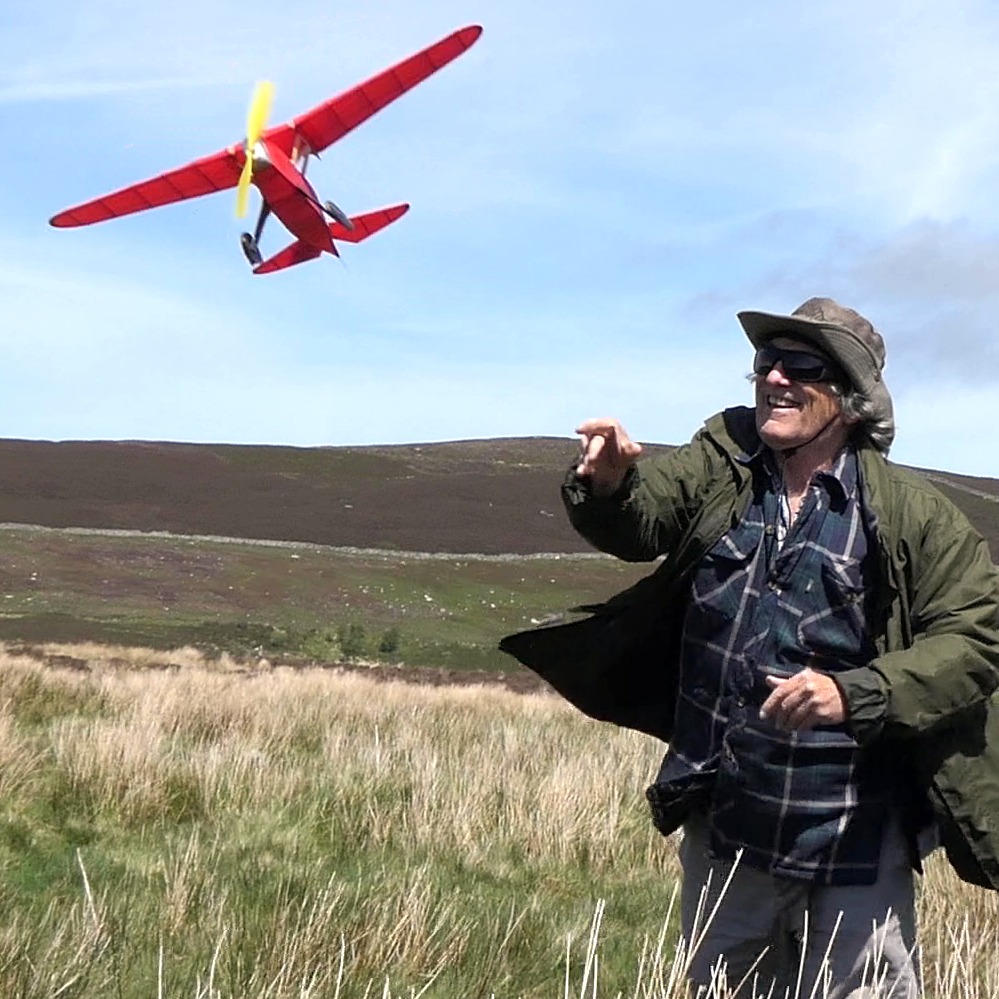
Rubber: The original power source, first used by Pénaud, in 1870, it remains popular for free-flight models. It packs a lot of power for its weight and the relatively short duration is often an advantage.
Power: In modelling terms this means the use of small internal combustion engines. They are two-stroke designs with fixed throttles, either diesel (compression ignition) or glow-plug. Some four-strokes and multi-cylinder engines are in use. Vintage petrol engines with spark plugs hold a special attraction for some. As the fuel is mixed with lubrication oil in model IC engines, they deposit significant oily residues on airframes.
CO2 - Carbon dioxide: These are planes powered by compressed CO2 gas delivered via a valve to the cylinder head. As such they have the aural advantages of a reciprocating engine without the messy exhaust of IC engines. However, consistent running can be difficult. They are available down to very small sizes for tiny models (to power a 9" wingspan pistachio scale model, for example)
Electric - Developments in battery and microelectronic technology have enabled the use of small electric motors, often employing some form of electronic timer to control the motor run over several power phases. Electric motors have several advantages - ease of use, consistent power levels, cleanliness and lack of noise. They may be employed to power all forms of model aircraft, from the lightweight indoor type, to larger sport or scale models flown outdoors.
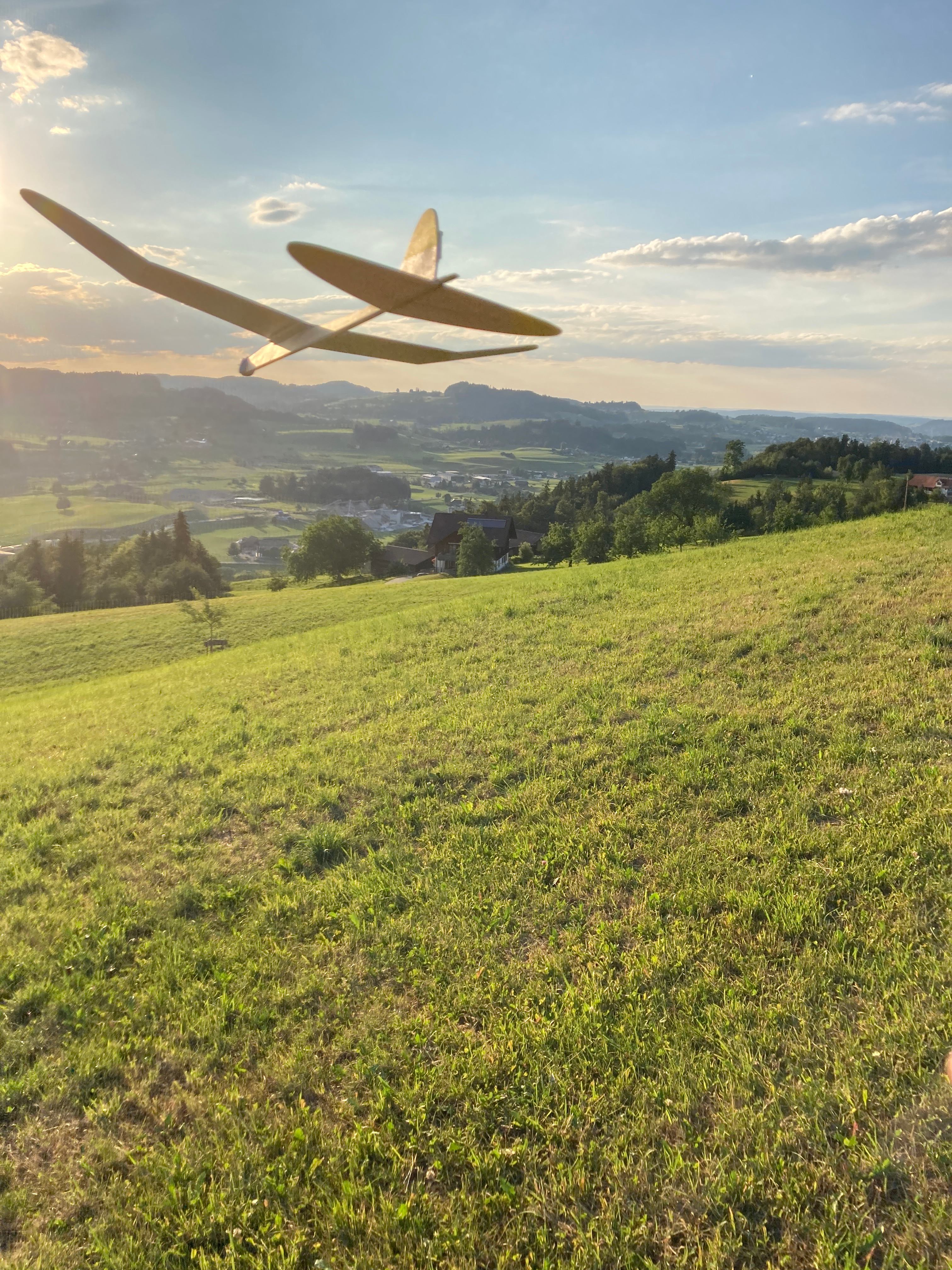
Gliders: Here the power source is gravity. Models are towed, thrown or catapulted to height, then descend in circles. Towlines are generally to a standard length, further launch heights can be achieved using bunt techniques - accelerating the model on launch and forcing it to climb. This involves temporarily altering the trim of the flying surfaces - no-one said it would be easy! Hand-launched , discus-launched and catapult-launched gliders have to deal with extreme differences in flying speed during the launch and glide phases with only fixed flying surfaces. Careful trimming and attention to the launch technique is therefore important. Great when it all comes together, though!
Types of free-flight planes - aims
Duration: Planes designed around getting the longest flight within certain parameters - such as weight limits or restrictions on engine run times. Outdoor competitions are usually run to a maximum flight time, to prevent excessive retrieval distances.
Scale: Planes designed to emulate full-size plane types. The emphasis is on making a model that both looks and flies like the real thing. As models are small and fly much closer to the ground than real planes, this can be a challenge. Also, some types were designed to be intrinsically unstable (thing fighter planes) so the model's design has to be modified to obtain enough intrinsic stability in order for it to fly by itself.
Sport: Models built and flown just for the fun of it. These may be vintage designs now no longer used for competitions, neat cabin-power models that were always intended for sport or odd-shaped designs built just to prove it could be done - the flying unicorns and hankies, for example.
Indoor: This can encompass all three of the above aims, just done in the confines of a sports hall. The weather is reasonably predictable, but the walls are awful hard. Indoor models can be built down to very low/ridiculous weights and manage long flights with only a tiny piece of rubber.