How
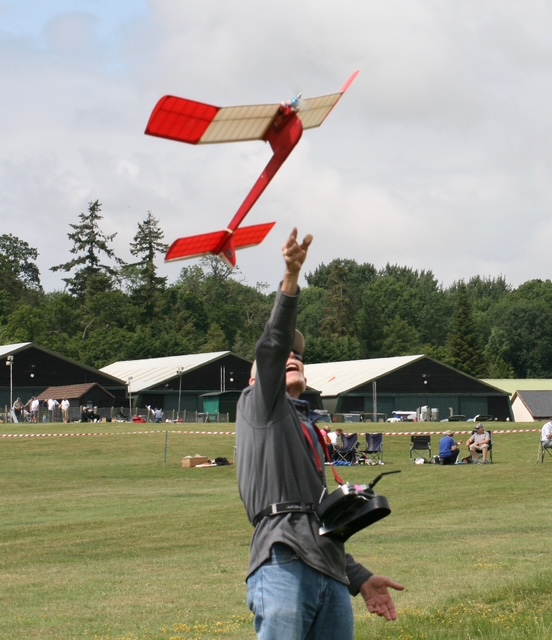
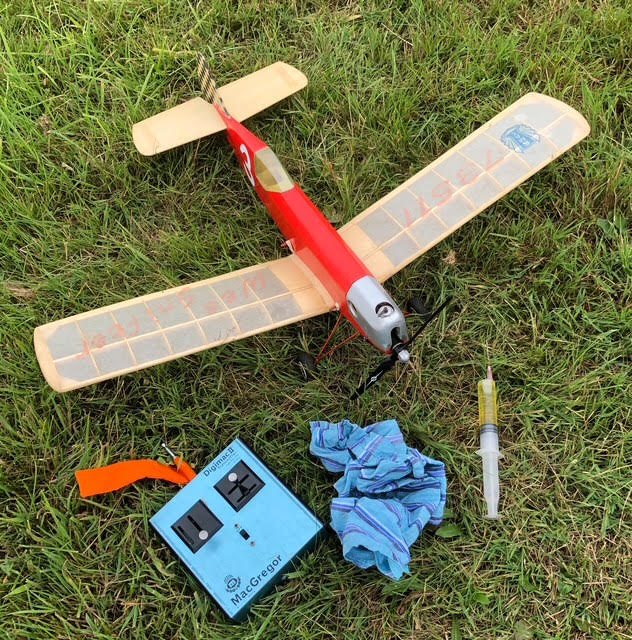
Generally speaking a radio-controlled model will not fly unaided, (putting aside for a minute those with gyro and high tech stabilisation). Radio-assisted models on the other hand have intrinsic stability and will fly free, like a model without radio control.
Basically, radio is added to a free flight design, usually a rudder and elevator. The extent of the control is more akin to inflight trim changes with extra movement to avoid hazards and to get out of thermals. The ability to land close to the launch site is also a huge advantage. The addition of either an engine/electric motor cut off or a throttle is often an advantage, especially on larger models. This enables the model to take off more briskly, then settle down to cruise mode for the flight.
Why
All of this enables the flying of models in smaller spaces, and for physically less able modellers to be able to retrieve their models without having to walk a long distance. Needless to say, flyaways are less likely! Small and less powerful models can be flown in amongst free flight models using the radio to keep the models closer and hopefully preventing a flyaway. Larger models are best flown and organised as per radio models with a ‘proper’ flight line.
The use of radio assist has given rise to several competitions such as single channel spot landing, vintage power duration and precision. There is also a radio assisted scale competition. Rules for these comps can be found here. [URL link to insert]